Key takeaways
Three new features, one question: what is your freight actually costing you?
This month’s Beacon Insider covers three releases from the product team. On the surface they look unrelated: SKU data on purchase orders, D&D rate setup, and invoices by email. Underneath, they are all answers to the same question. Most businesses cannot say what a container cost them until weeks after it has landed, and by then the money is gone. These three features close that gap. The video shows you how they work. This article is about why we built them.
SKUs on purchase orders: stock on the water is cash you cannot touch
Ask most supply chain teams how much stock is on the water right now, in value terms, and the honest answer is a spreadsheet exercise that takes a day and is wrong by the time it is finished. The PO lives in the ERP. The container lives in a carrier portal. The product value lives somewhere else again. Nobody holds all three.
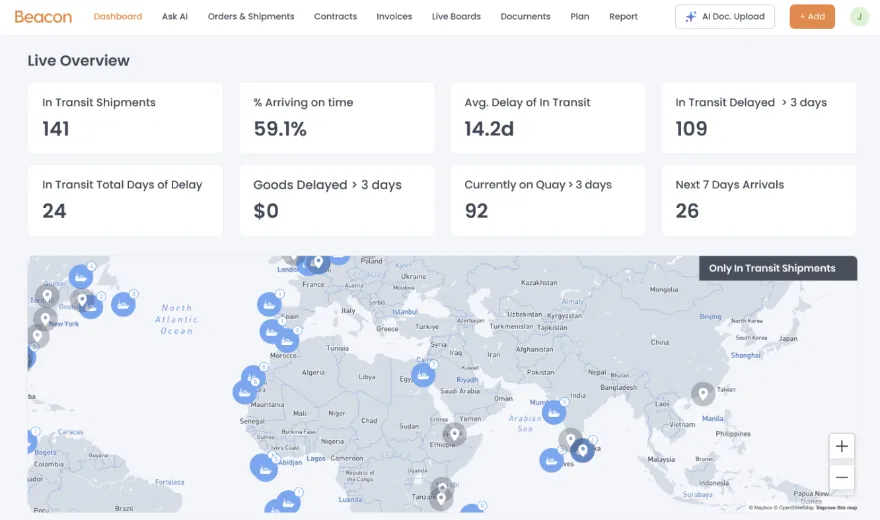
That matters because stock that has not landed is stock you cannot sell. Finance needs to know how much working capital is tied up in transit, how much is sitting at the port of discharge, and how far each pound of it is from becoming revenue. Operations needs the same picture to plan inbound resource and answer the inevitable “where is my order” question with a number rather than a shrug.
You can now attach SKU detail to any PO in Beacon, and that value follows the freight. Filter any report or live board by SKU and you get total stock value by stage: waiting to sail, on the water, at the POD. It is a small input with a disproportionate payoff, because it turns a container list into a working capital view.
D&D rate setup: you cannot avoid a cost you cannot see coming
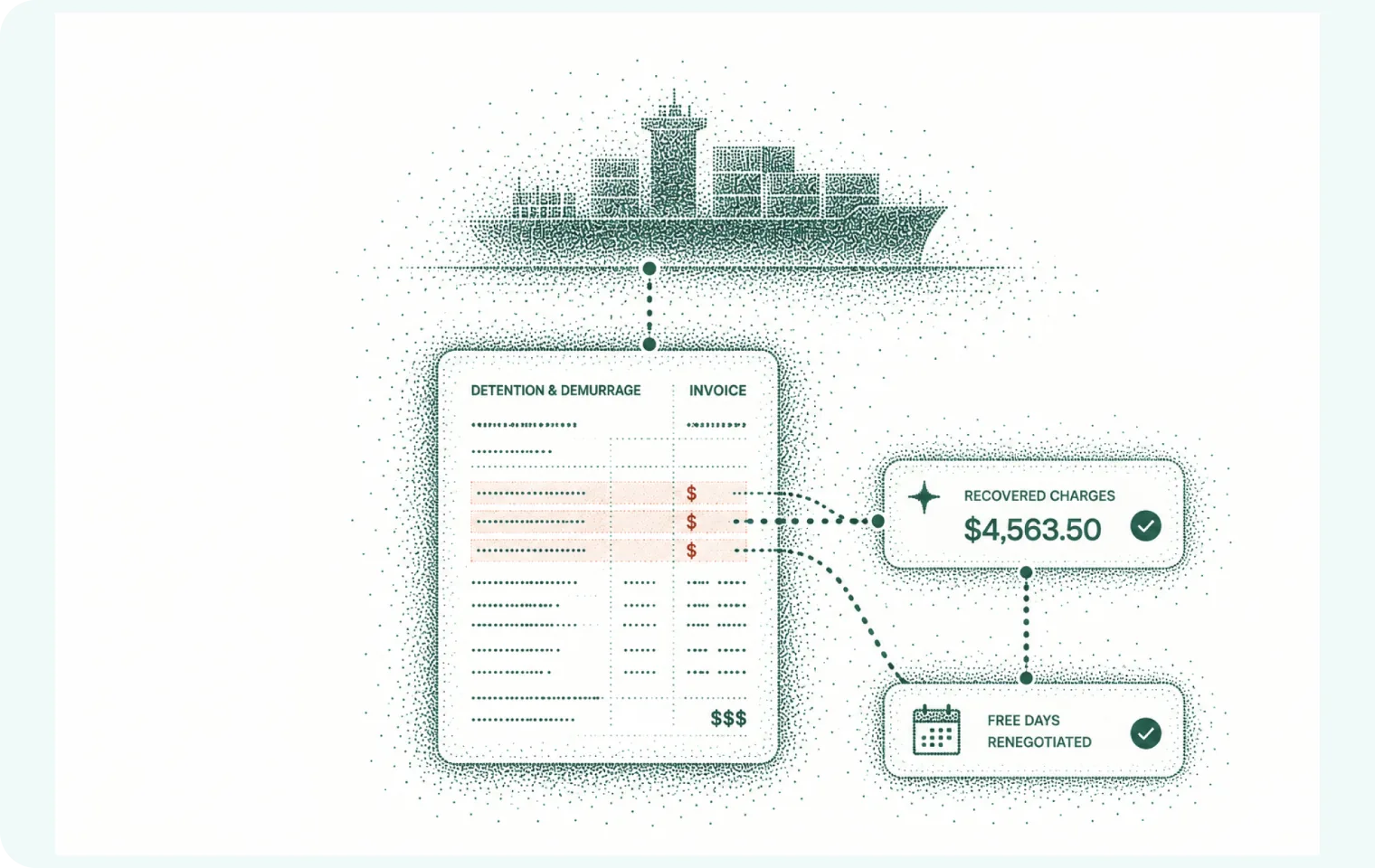
We have been clear on this for a while. D&D is an avoidable cost, and the target should be zero. There are two ways to get there: stop containers breaching free days, and recover the charges that never should have been applied. Both depend on knowing, per container, how many free days you have, how many are left, and what each extra day costs.
Beacon already pulls D&D terms out of the contracts you upload. But customers kept telling us the same thing: not every rate lives in the contract. There is a side agreement with the port. A tariff negotiated for one lane. Terms that changed mid-quarter and never made it into the document. If Beacon does not know about those rates, it cannot tell you what the container on the quay is costing you today.
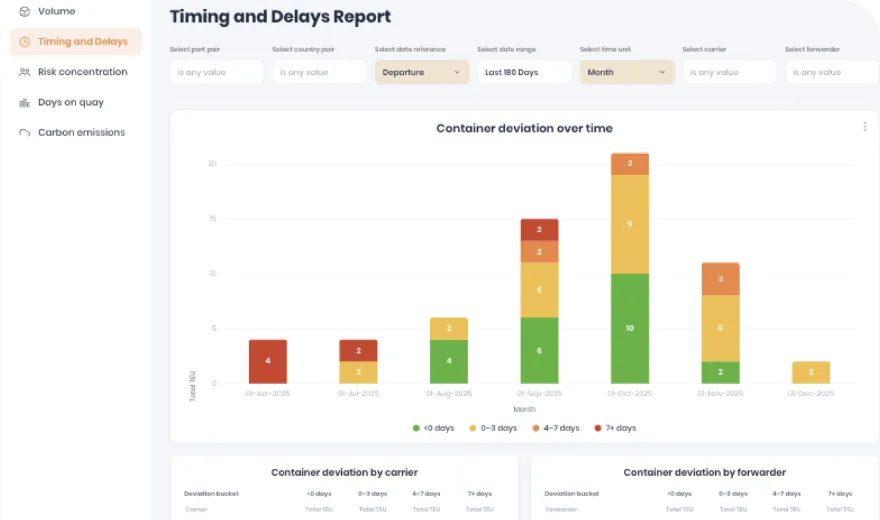
So you can now set those rates yourself, by port, carrier and container type, with free days and daily tiers. Once they are in, every matching container shows the charge it has incurred, the free days remaining, and the total cost of the move including penalties. The useful part is the lead time. A live board of containers that will start incurring charges in the next two days gives your team a window to book a haulier before the fee starts, rather than a bill explaining why it did.
If you want to see what this looks like at scale, read how a customer cut their D&D bill using Beacon here.
Invoices by email: 100 invoices a day should not be a manual job
Financial control in Beacon comes from connecting three sets of data: orders and shipments, contracts, and invoices. Get all three in one place and you can see whether you were charged what you agreed, line by line. Miss one and the picture falls apart.
Invoices were the weak link. You could upload them, and Beacon would extract the data and reconcile it against your contract. But if you receive 50 or 100 invoices a day across a dozen carriers and forwarders, the step of getting them into Beacon was itself a job, and jobs get skipped. Every invoice that does not make it in is an invoice nobody checks.
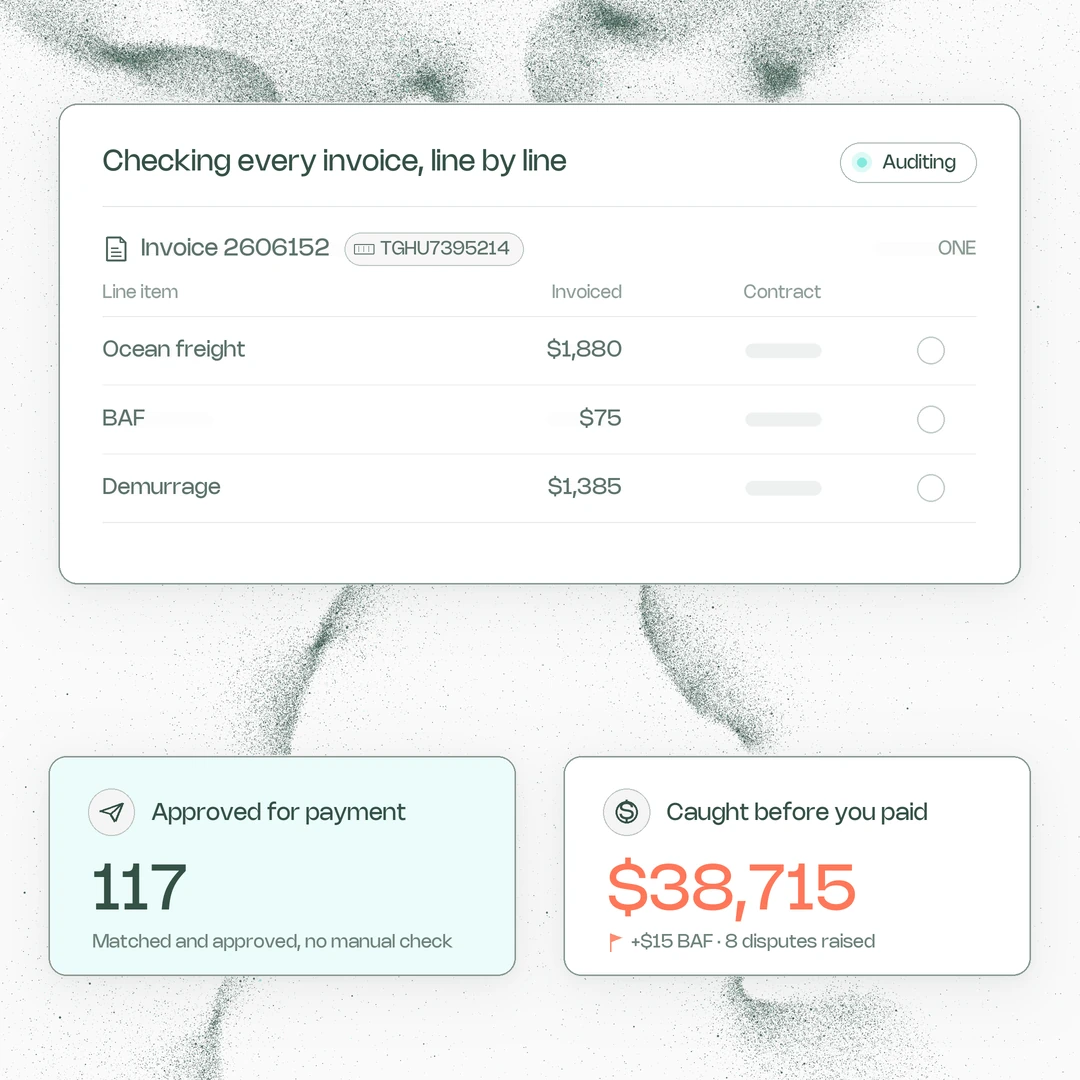
Upload by email removes that step. Your carriers, forwarders and suppliers send invoices to a Beacon address and they arrive already extracted and reconciled, with the variance against your contract broken down by line: fuel surcharge, BAF, bunker, whatever it is. Your team’s job shifts from chasing documents to deciding what to approve and what to dispute. Given that between 5% and 7% of freight invoice value is typically billed incorrectly, full coverage is the whole point. You cannot recover what you never audited.
Why these three together?
Each feature is useful on its own. Together they give you the cost of a container from the moment the PO is raised to the moment the invoice is paid: the value of the stock inside it, the penalties it picked up at the port, and whether the bill at the end matched the deal you signed. That is what we mean by financial control over your freight.
Questions on any of this, or want help getting it set up on your account? Get in touch as usual.