Key takeaways
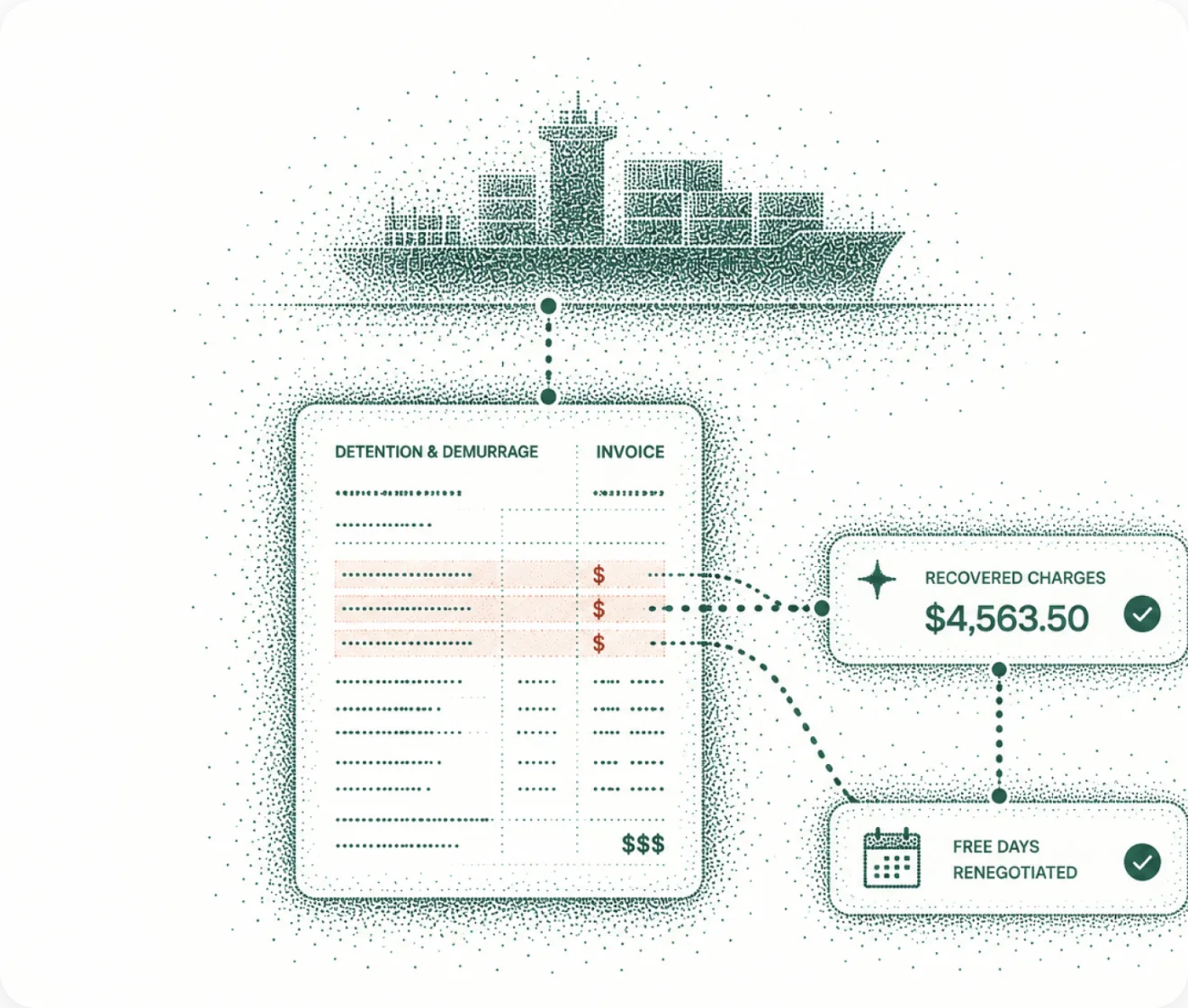
Demurrage is a charge for leaving a full container at the terminal after its free time runs out. Detention is a charge for keeping the carrier's container outside the terminal too long. Both are avoidable when you can see free time running out.
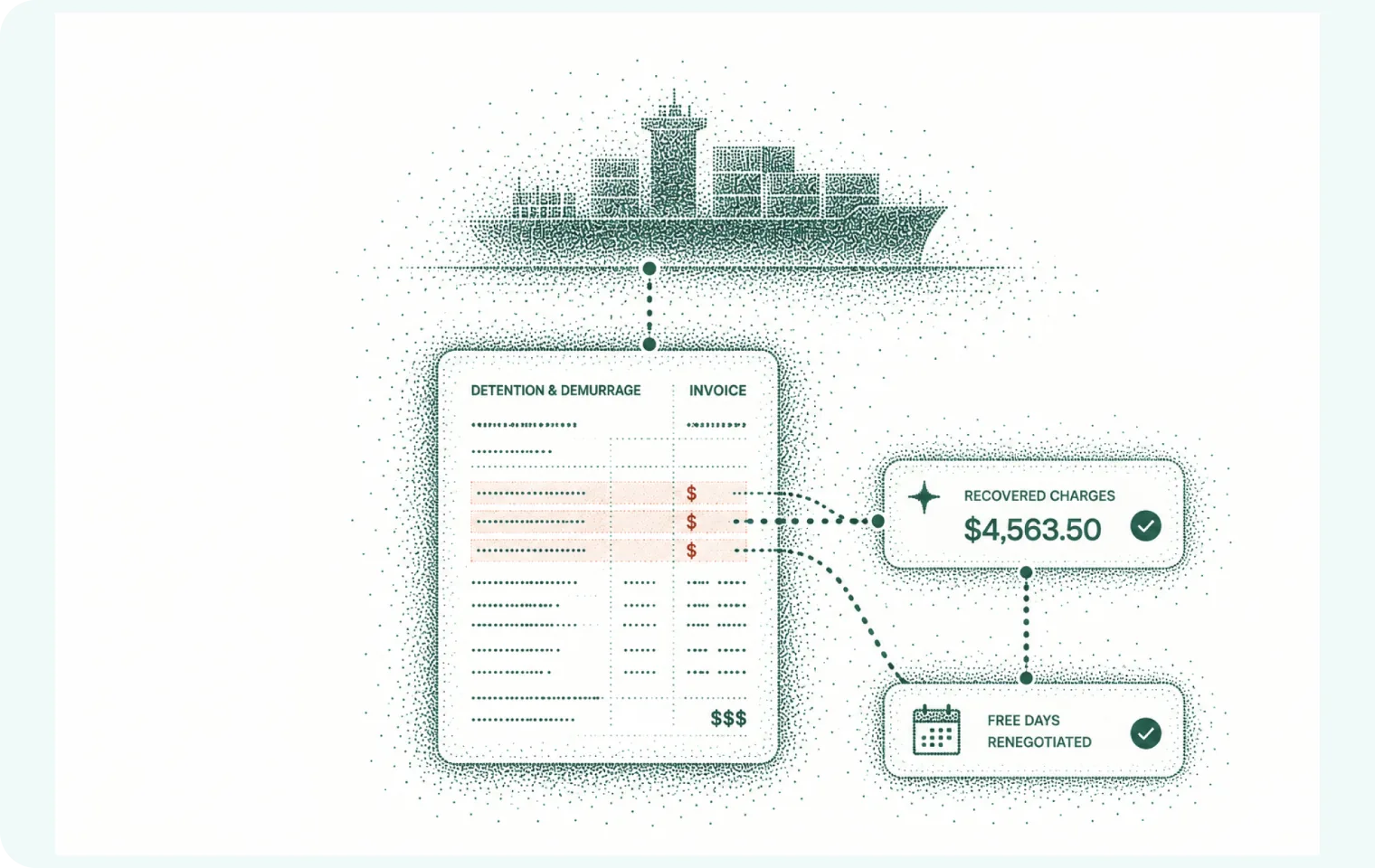
Know each container's free time the day it lands. Check every D&D invoice against your contract before you pay it. Take a year of D&D data into your next contract negotiation.
What is demurrage?
Demurrage is charged by the terminal or carrier, per container, per day, once the free time agreed in your contract has run out and the full container is still in the port.
Free time varies by carrier, port and contract, which is why the same delay can cost very different amounts on two shipments.
What is detention?
Detention starts when you have collected the container but haven't returned it empty within the free days allowed. It is charged by the carrier that owns the container.
Why the charges build up
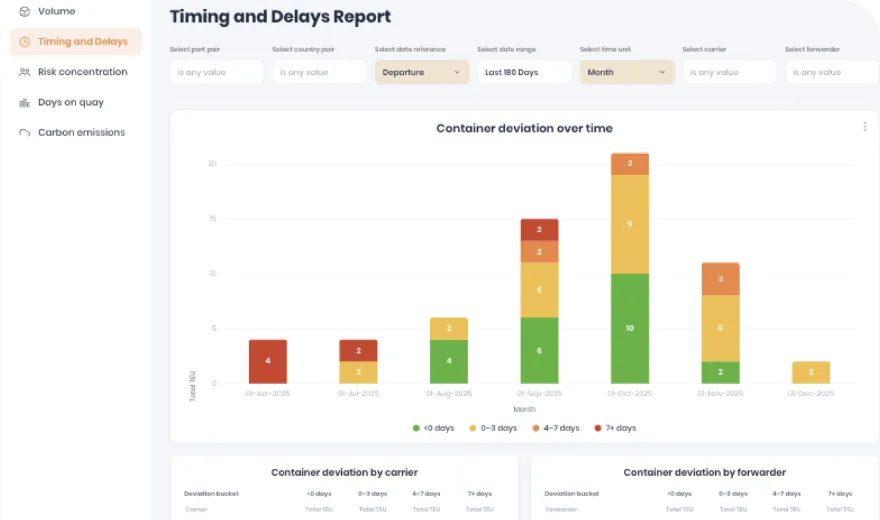
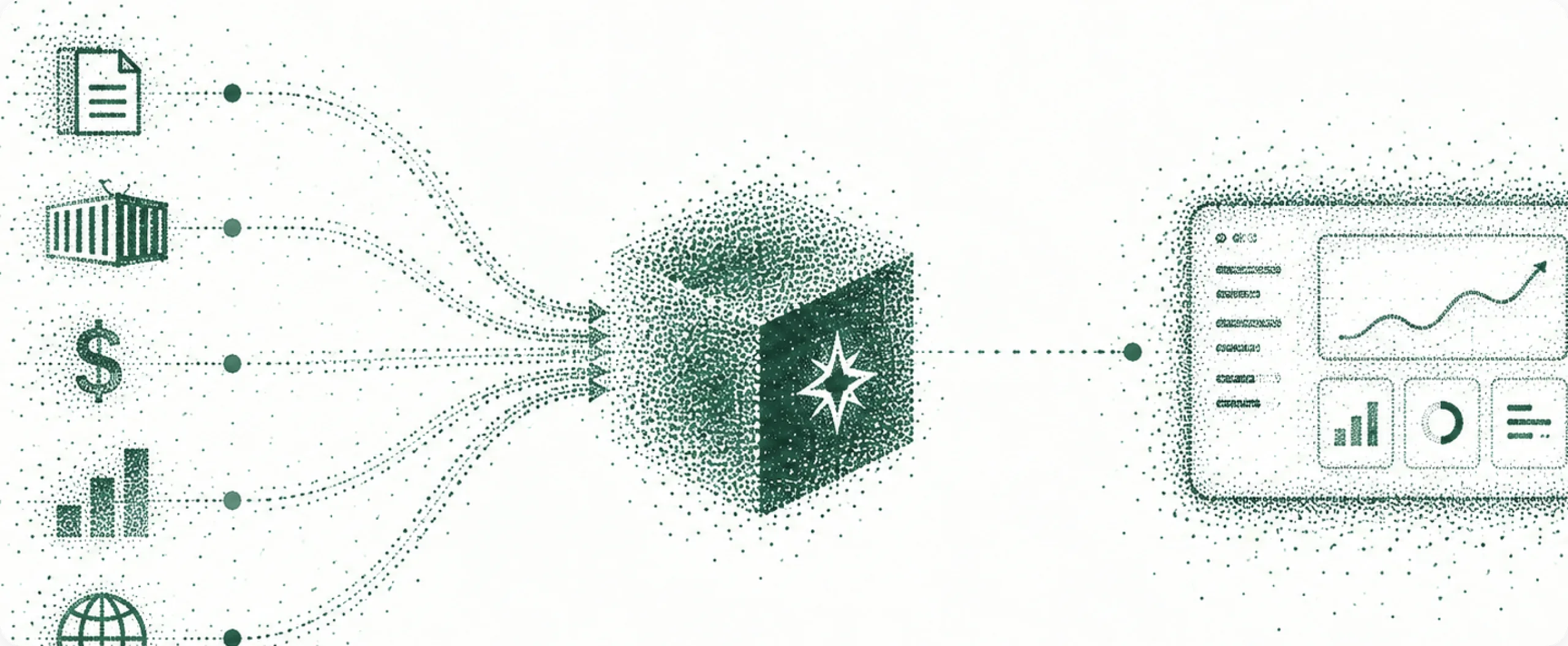
Most D&D comes from delays nobody saw in time: a late customs release, a missed collection slot, a vessel that arrived early. The information usually exists; it is spread across carrier portals, forwarder emails and spreadsheets.
“A demurrage invoice is a record of a delay you didn't see in time.”
How to stop paying for them
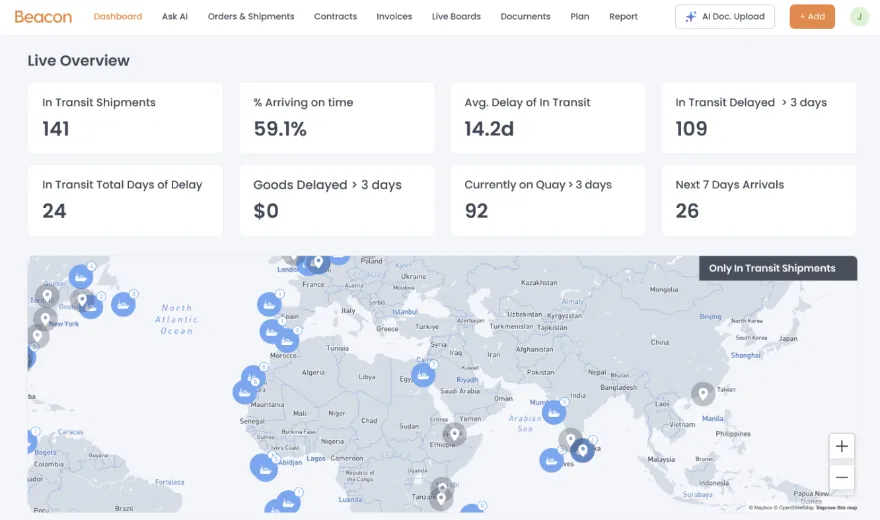
Track free time for every container in one place, get alerted before it runs out, and check each D&D invoice against the contract and what actually happened before you pay it.