What is an AI Supply Chain Workspace?
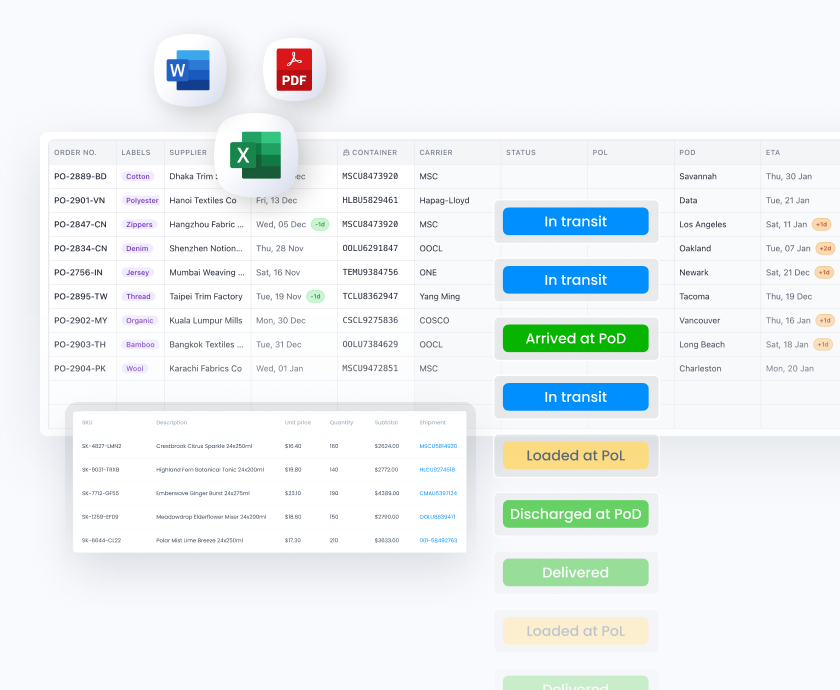
Supply chain workspaces democratize logistics data across global operations while dramatically reducing invoice processing time, significantly cutting demurrage and detention charges, and eliminating repetitive "where's my stuff?" inquiries. Unlike traditional visibility tools that only show shipment locations, workspaces unify data from ERPs, carriers, freight forwarders, and vital documents into AI-powered platforms where teams track, analyze, and coordinate decisions in real-time.
The difference? Traditional tools add another system to manage. Workspaces connect your existing systems and enable self-service access to data across distributed teams.
The $15.4 Billion Problem
The Federal Maritime Commission reports that nine major ocean carriers collected $15.4 billion in detention and demurrage charges between April 2020 and March 2025. Many of these fees stem from coordination breakdowns across complex supply chains.
When your ops team doesn't know a container has arrived at the port because that information lives in a carrier portal no one checked, they can't arrange hauliers to pick it up in time - and you pay demurrage. When finance spends hours reconciling invoices against shipment records scattered across systems, processing takes far longer than necessary. When customer service can't see actual delivery status, they make promises based on outdated information.
Gartner research shows that 80% of supply chain data isn't accounted for in digital decision models because it lives in disconnected systems. For companies managing complex global operations across multiple regions, carriers, and warehouses, this fragmentation becomes exponentially more costly.
How Workspaces Differ from Enterprise TMS or Visibility Tools
Enterprise supply chain software focuses on specific functions. TMS and Visibility platforms each solve individual problems but create coordination challenges by adding another system to manage - particularly problematic when you're running operations across multiple regions, business units, or product lines.
Workspaces provide a unified environment where all supply chain data, communications, and decisions converge regardless of which systems generated them or which region they originated from. The workspace connects to your ERP through APIs, pulls tracking data directly from carriers globally, receives documents from freight forwarders, Cargo Ready Dates from your suppliers, and monitors external factors like port congestion.
What Problems do Supply Chain Workspaces Solve
1. Scattered Information Across Multiple Systems and Teams
Research shows that 75% of supply chain leaders rely on 3-10 systems to make basic decisions, with substantial portions of their work time spent on manual data gathering. For larger organizations, this problem multiplies - logistics managers in EMEA check different systems than those in APAC, regional teams maintain separate spreadsheets, and global visibility requires stitching together fragmented data sources.
Workspaces consolidate everything regardless of carrier, freight forwarder, or region. Your global operations team sees ocean freight from Asia, air shipments from Europe, and ground transport across North America in one view. No more logging into multiple carrier portals across regions.
2. Invoice Verification Takes Too Long
Manual invoice processing is time-consuming and costly. Research found that the majority of carrier invoices contain discrepancies, with most errors stemming from inconsistent information across parties.
For companies managing global freight spend across multiple carriers and forwarders, invoice reconciliation becomes a significant operational burden. Workspaces automatically associate invoices with underlying shipment records containing dates, routing, milestones, and contracted rates across all regions. Invoice verification drops from hours to seconds.
3. Poor Coordination Drives Up Detention Charges
North American shippers pay substantial daily fees for detention and demurrage. Companies using workspace approaches report significant reductions in these charges through better visibility and coordination between ops teams and hauliers.
When stakeholders across different regions and business units lack direct access to shipment data, coordination breaks down. Workspaces democratize this information - ops teams can quickly arrange pickups, warehouse managers across multiple facilities can prepare for inbound containers, and customer service can give accurate ETAs without creating bottlenecks.
For companies operating multiple warehouses across regions, coordinating inbound freight becomes exponentially more complex without unified visibility.
Fever-Tree's logistics manager noted they were "bleeding demurrage every week" before implementing Beacon's workspace. After establishing unified visibility, avoidable fees dropped significantly.
4. Customer Service Drowns in Status Questions
Customer service teams and internal teams can significantly reduce inquiries through self-service dashboards. With Workspace solutions businesses can substantially reduce customer service calls within months by providing shareable dashboards where stakeholders check shipment status themselves.
For companies serving enterprise customers or managing complex distribution networks, this problem scales dramatically. Each regional sales team, major customer, and distribution center generates status inquiries that operations teams must manually answer.
5. Global Operations Teams Become Human APIs
The constant interruptions drain productivity across time zones. "When's my shipment arriving?" "Has my container cleared customs?" "What's the ETA for the EMEA warehouse?" Your operations team answers the same questions dozens of times weekly, manually checking carrier portals across regions and relaying information to distributed stakeholders instead of solving actual problems.
This problem intensifies for global companies where regional teams work different hours. Asia asks questions that European ops teams answer 12 hours later. North American warehouses wait for updates from overnight teams.
Supply Chain Workspaces eliminate this by empowering stakeholders to check status themselves. Create shareable dashboards filtered by region, customer, product line, or warehouse. Send them the link once - they check it themselves from then on, regardless of time zone.
The conversation shifts from "Can you check on my shipment?" to teams proactively monitoring their own containers. Your operations team focuses on solving actual problems - customs delays, port congestion, carrier issues - instead of being the middleman for every status question across regions. You could even set smart notifications to your criteria, so you are only notified when you need to take action.
6. Data Stays Trapped with Regional Freight Forwarders
Many global companies rely on different freight forwarders across regions. When you switch providers or consolidate forwarders, historical data remains trapped in the old forwarder's proprietary systems.
This becomes particularly problematic when renegotiating contracts, evaluating performance across regions, or consolidating logistics operations. You lack a unified view of historical performance, making data-driven decisions nearly impossible.
Workspaces pull tracking data directly from carriers, giving you ownership regardless of which forwarders you use in different regions and allows you to see and generate powerful reports. This strengthens negotiating positions globally and maintains institutional knowledge even when changing partners or consolidating operations.
7. Your Data Locked Away Across Regions Means Weak Global Negotiations
When your shipment data lives in different forwarders' systems across regions or scattered across carrier portals, you're negotiating blind globally. You can't analyze carrier performance across your network, identify patterns that span regions, or challenge the numbers carriers present. You're relying on regional forwarder reporting - which often conveniently omits the delays, surcharges, or service failures that should inform your global contract negotiations.
This becomes particularly problematic when negotiating global carrier contracts. You lack unified visibility into a carrier's performance across your EMEA, APAC, and Americas operations. Regional teams report different experiences, but you can't definitively show patterns or leverage collective volume for better rates. Without independent data, you have no leverage.
Workspaces give you ownership of your global logistics data. You track performance across all carriers and forwarders continuously across all regions. When contract renewal time arrives, you walk into negotiations with comprehensive global performance data: actual transit times vs. contracted times across lanes, on-time delivery rates by region, detention patterns, surcharge frequency, and service consistency across your network.
This fundamentally shifts negotiating power at the enterprise level. Instead of accepting carrier assurances about performance, you present data showing exactly what happened across your entire operation. Companies using their own performance data report significantly better contract rates because carriers can't dispute documented service levels across regions.
Building AI on Your Data, Securely at Scale
Beyond negotiations, owning your data enables you to build enterprise AI capabilities without exposing sensitive commercial information to third parties. When logistics data lives in regional forwarder systems, you can't safely deploy AI models to optimize global routing, predict delays across your network, or automate decisions - you'd be training AI on someone else's platforms with your competitive intelligence exposed across multiple vendors.
For global operations, this data security concern multiplies. Your logistics data reveals:
- Global supplier networks and sourcing strategies
- Volume patterns and seasonal fluctuations across regions
- Customer locations and distribution strategies
- Inventory positioning and network optimization
- Strategic initiatives like market expansion or supplier consolidation
When this intelligence lives fragmented across third-party systems in different regions, you can't safely or effectively deploy AI to extract insights as you would lack context.
Identify network optimization opportunities that span regions
Your logistics data contains your competitive playbook. Workspace data ownership means you can safely deploy AI to extract insights, optimize operations, and automate decisions without exposing commercial secrets to vendors or competitors.
8. Demand Planning Reacts Too Late Across Regions
McKinsey research shows that 90% of supply chain leaders encountered significant operational challenges in 2024, with disruptions lasting over a month costing up to 45% of annual profit. The difference between vulnerable and resilient supply chains is how quickly teams coordinate when problems arise.
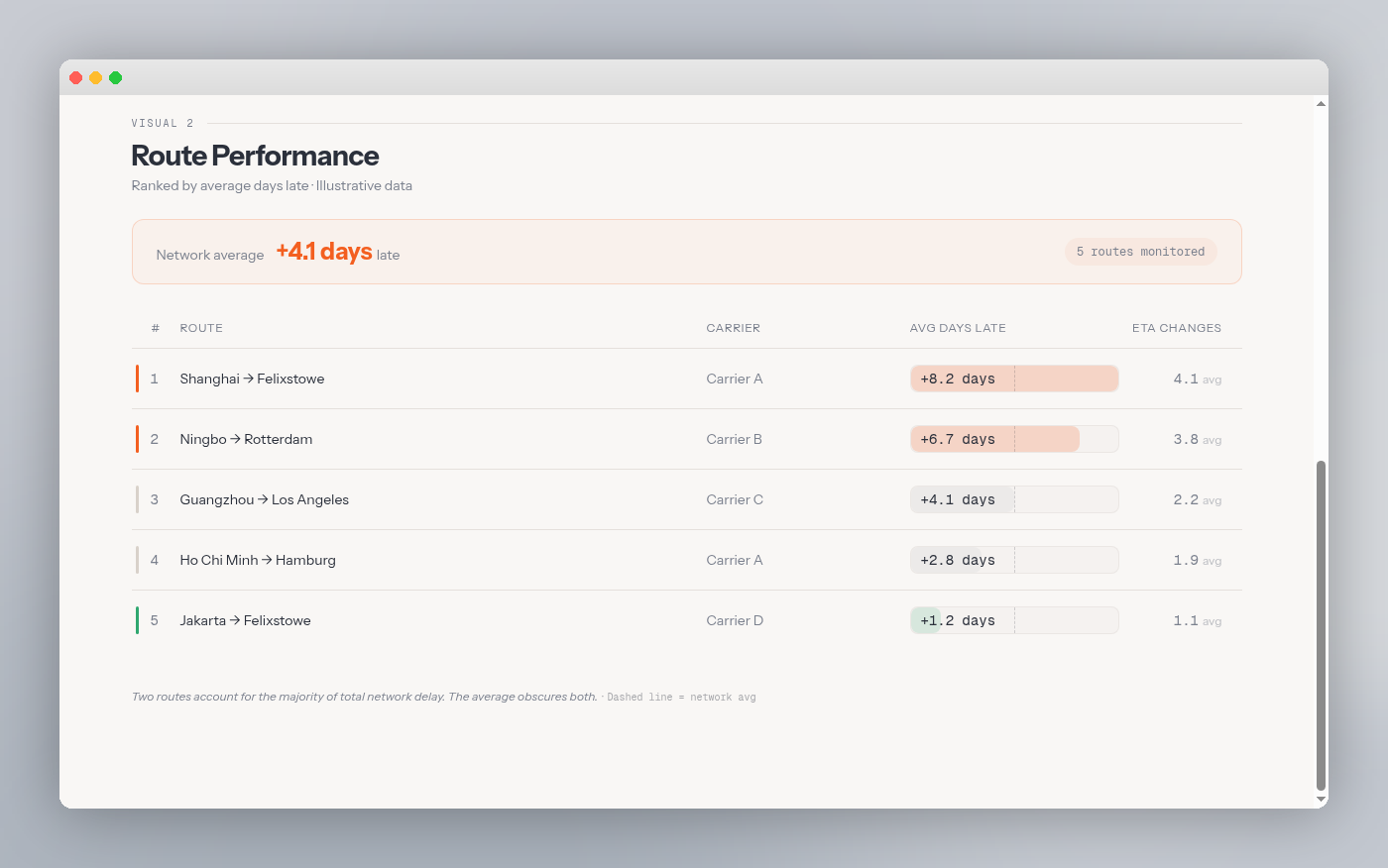
For global operations, this coordination challenge multiplies. A delay in Shanghai affects inventory planning in Rotterdam and customer commitments in Chicago. Without unified visibility and coordination, regional teams react independently rather than orchestrating a coordinated response.
Workspaces provide API connections that update ERP and demand planning systems automatically across regions. Global teams allocate inventory before stockouts occur rather than discovering shortages when customers call.
Core Capabilities
Unified Data Integration Across Global Operations
Workspaces bring together information from regional ERPs, WMS platforms across multiple facilities, carrier APIs from 160+ global carriers, customs databases in different countries, IoT sensors, port congestion reports, and weather data through APIs rather than manual entry. When a carrier updates shipment status anywhere in the world, the workspace reflects it automatically for all relevant stakeholders.
This unified foundation enables contextual intelligence across your entire operation. The workspace doesn't just show a delay in Shanghai. It shows impact on production schedules in Germany, whether alternative inventory exists in distribution centers, and cost implications across affected regions.
Real-Time Tracking and Alerts Across Time Zones
Workspaces automatically monitor shipments across ocean carriers, airlines, and ground transport globally, sending alerts when milestones are reached or delays occur. Teams configure which events trigger exception alerts and which stakeholders across regions receive them.
This becomes critical for global operations where stakeholders work different hours. Automated alerts ensure EMEA teams know about Asia shipment delays without waiting for overnight colleagues to relay information.
Beacon's head of business operations at Known Supply Chain explained: "Beacon plugged the gaps with higher accuracy rates than our existing providers, which helps our customers rely on us. Having clean data makes us look good to our clients."
Collaborative Workflows Across Distributed Teams
Supply chain workspaces enable managers across regions, procurement teams, warehouse staff at multiple facilities, and external partners to work in shared environments. Comments attach directly to containers or POs. Everyone sees the same information simultaneously through live boards regardless of location or time zone.
When a customs delay occurs in Hamburg, all affected parties - procurement in the UK, warehouse operations in Poland, sales teams in France - learn simultaneously and coordinate solutions together rather than discovering problems through delayed email threads across time zones.
Industry research shows 43.5% of supply chain professionals report obstacles in seamless data sharing, while 37.7% still rely primarily on email. For global operations, these coordination failures compound across time zones and regional teams. Workspaces provide systematic collaboration infrastructure that works asynchronously.
AI-Powered Predictions and Prescriptive Analytics
Advanced workspaces analyze historical patterns across global operations and real-time variables to predict potential issues like supplier delays, detention fees, or route disruptions. Rather than just alerting teams about delays, AI evaluates alternative carriers globally, analyzes cost-time tradeoffs across regions, and suggests specific actions based on your network configuration.
Research shows that top-performing supply chain organizations use AI at more than twice the rate of lower performers. By 2026, AI-powered supply chain systems will enable 50% faster decision-making and 40% more accurate demand forecasting.
For companies with complex global operations, AI becomes essential for identifying patterns and optimization opportunities that human analysis can't scale to capture.
Implementation: Weeks Not Years
Modern workspaces connect to existing systems rather than replacing them. This allows teams to maintain daily operations while gradually shifting workflows into the unified workspace - critical for global operations that can't pause for lengthy implementations.
Top-tier TMS systems cost over $1 million and take more than one year to implement. Enterprise implementations often stretch to 18-24 months. Workspaces provide similar capabilities without multi-year timelines or the risk of implementation failure.
The Evolution from Visibility to Intelligence
The supply chain industry has focused on achieving "visibility" as a goal. Companies invest in tools showing where shipments are and when they'll arrive.
Visibility alone proves insufficient in volatile environments, particularly for global operations. Research shows only 6% of companies have achieved complete supply chain visibility, and 69% still have poor visibility. But even companies with visibility struggle if they can't coordinate decisions across regions, business units, and time zones based on that information.
Workspaces solve both problems. They provide comprehensive visibility while enabling the coordination needed to act on it effectively across distributed teams.
The World Economic Forum notes that supply chain disruptions lasting longer than a month occur every 3.7 years on average, costing businesses up to 45% of annual profit over a decade. Companies with AI-powered workspace capabilities navigate these disruptions more effectively than those relying on manual coordination - especially critical for global operations where disruptions cascade across regions.
Frequently Asked Questions
Can workspaces integrate with our existing enterprise systems?
Yes. Modern workspaces connect to existing ERPs (SAP, Oracle, Microsoft Dynamics), WMS, and other systems through APIs. The workspace sits above your current infrastructure, connecting systems across regions that previously didn't communicate. This enables rapid deployment without disrupting core business systems or requiring costly middleware.
How long does implementation take for global operations?
Modern workspaces like Beacon enable pilot regions to become operational within days. Global rollout typically occurs over 6 weeks, allowing each region to adopt gradually without disrupting operations. This phased approach dramatically reduces implementation risk compared to big-bang enterprise deployments.
Do we need to replace our freight forwarders or 3PLs?
No. Workspaces complement your existing forwarder relationships across regions. The workspace pulls tracking data directly from carriers, giving you data ownership while still leveraging forwarder relationships for booking, customs clearance, and problem resolution. Many companies use different forwarders regionally - workspaces unify visibility across all of them.
What happens to historical data when consolidating or switching providers?
Since the workspace pulls tracking data directly from carriers, your historical shipment information remains accessible regardless of which freight forwarders you use in different regions. When consolidating providers or switching partners, you retain all performance data and communication history - critical for contract negotiations and performance evaluation.
How do workspaces help distributed teams stop answering the same status questions repeatedly?
Workspaces solve the interruption problem by democratizing access to shipment data across global operations. Create role-based dashboards for different audiences: warehouse managers across facilities see inbound containers, regional customer service teams see relevant shipments, major customers see only their orders.
Instead of operations teams manually checking multiple carrier portals to answer "where's my stuff?" questions across time zones, stakeholders access live dashboards themselves. You share the link once - they check it whenever needed, regardless of location or time zone.
This works for any operational scale. The pain point is universal: people interrupting your operations team for information that should be self-service.
How do workspaces help during global disruptions?
During crises affecting multiple regions, workspaces enable faster coordination by giving all parties simultaneous access to the same information. Automated exception alerts notify relevant stakeholders across time zones instantly. Unified visibility shows impact across all affected shipments globally, enabling coordinated response rather than fragmented regional reactions.
This becomes critical when disruptions cascade - port congestion in Asia affects inventory in Europe and customer commitments in North America. Unified visibility enables orchestrated response rather than delayed, piecemeal reactions.

What is Supply Chain Intelligence?
.png)